
Modern life is busy. Work, family, responsibilities and constant demands can leave us feeling rushed and overwhelmed. When this happens, one of the first things we forget to do properly is breathe.
Many people begin to breathe shallowly from the chest rather than deeply from the abdomen. This reduces the amount of oxygen reaching the body and can leave us feeling tense, tired or anxious.
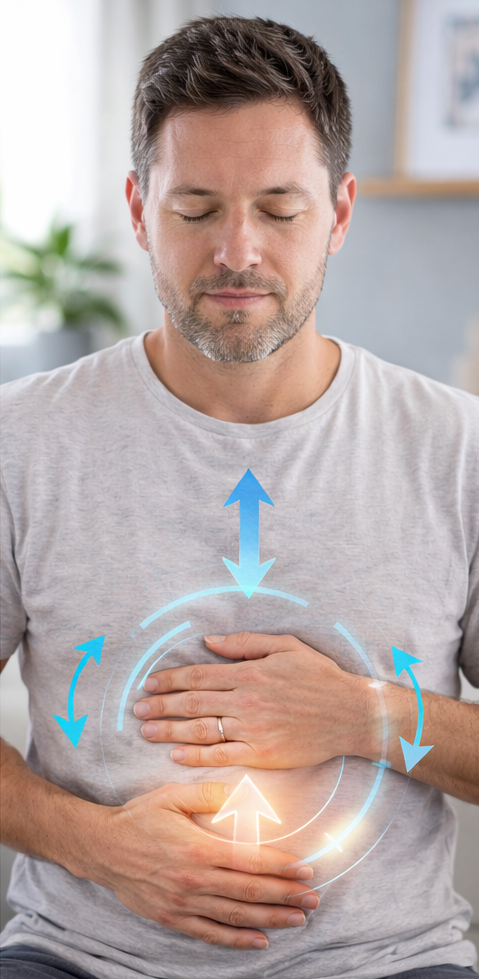
Our bodies are designed to breathe slowly and deeply using the diaphragm. This natural abdominal breathing allows oxygen to reach the trillions of cells in the body and helps vital organs function properly.
By learning to pause and breathe more consciously, we can support the nervous system, reduce stress and bring the body back into balance.
The simple breathing exercises on this page are here to help you reconnect with your breath and restore a more natural rhythm.
This audio is for moments when stress feels overwhelming and breathing feels tight, shallow, or difficult. There is no technique to master here. Simply allowing yourself to notice the breath - just as it is - helps the nervous system begin to settle. The focus is on grounding, centring, and gently reconnecting with the feeling of safety in the body. This practice helps quiet the mind and reassures the body that it is safe to breathe again.

If you feel more connected to your breath but find full abdominal breathing challenging, this practice offers a supportive next step. You’ll be guided to gently encourage the breath down into the belly without force or strain. Over time, this helps improve breathing capacity, calm the nervous system, and reduce stress held in the chest and shoulders. A steady practice supports deeper relaxation and greater emotional regulation.
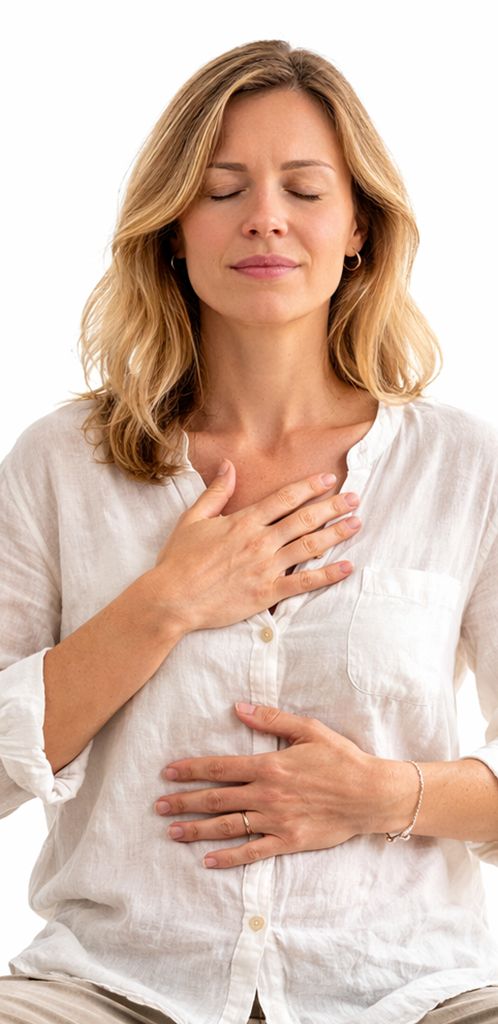
This practice is for those who feel ready to work with structured, rhythmic breathing. Using a steady count - breathing in for six, holding for three, breathing out for six, and holding again - helps regulate the nervous system, slow the heart rate, and create a sense of calm focus. This technique supports stress relief, emotional balance, and deeper mind–body connection when practised regularly.